
Semaglutide vs Tirzepatide: A Comprehensive Guide to Weight Loss Medications
MK
Understanding Semaglutide and Tirzepatide
When it comes to weight loss medications, two names are increasingly gaining attention: Semaglutide and Tirzepatide. Both medications have been developed to aid weight loss in individuals struggling with obesity or overweight conditions, but they function in slightly different ways.

What Are Semaglutide and Tirzepatide?
Semaglutide and tirzepatide are medications originally developed for diabetes that are now widely used for medical weight loss.
They belong to a class of medications that regulate hormones involved in appetite and metabolism.
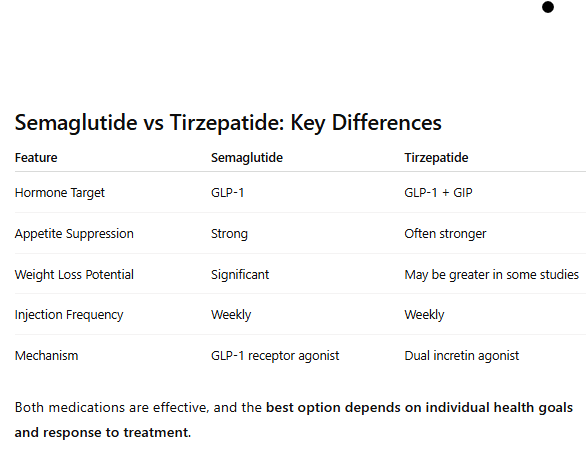
Semaglutide works by mimicking a hormone called GLP-1 (glucagon-like peptide-1).
Tirzepatide activates two hormones instead of one:
- GLP-1
- GIP (glucose-dependent insulinotropic polypeptide)
Because tirzepatide targets two metabolic pathways, it may lead to greater appetite suppression and weight loss for some patients.

How Do These Medications Work?
Both medications work by influencing the body's natural hormones that regulate hunger, digestion, and blood sugar.
1. Reduce Appetite
They act on the brain’s hunger centers to reduce appetite and increase feelings of fullness.
2. Slow Stomach Emptying
Food stays in the stomach longer, helping you feel satisfied after smaller meals.
3. Reduce Cravings
Many patients notice reduced cravings for sugar, snacks, and high-calorie foods.
4. Improve Blood Sugar Control
They help regulate insulin and glucose levels, which can improve metabolic health.
Benefits of Semaglutide and Tirzepatide for Weight Loss
When combined with lifestyle changes, these medications may help patients:
- Lose 10–20% of body weight in clinical studies
- Reduce cravings and overeating
- Improve blood sugar control
- Improve cholesterol and cardiovascular risk markers
- Support long-term weight maintenance
Many patients report that food noise decreases, making it easier to stick to healthy eating habits.

How Are These Medications Administered?
Semaglutide and tirzepatide are administered as subcutaneous injections.
This means the medication is injected into the fat layer under the skin, usually in:
- Abdomen
- Thigh
- Upper arm
Injection Frequency
Most protocols involve one injection per week.
Doses typically start low and gradually increase to minimize side effects and improve tolerance.
Many patients find that weekly injections become a simple routine after the first few weeks.
Common Side Effects
Most side effects are mild and temporary, especially during the early weeks.
Common side effects include:
- Nausea
- Reduced appetite
- Constipation
- Diarrhea
- Fatigue
- Mild stomach discomfort
These symptoms often improve as the body adjusts.
Less Common but Possible Adverse Effects
Although uncommon, possible risks may include:
- Severe nausea or vomiting
- Dehydration
- Gallbladder issues
- Pancreatitis
- Low blood sugar (especially if combined with diabetes medications)
Patients should contact their healthcare provider if severe symptoms occur.
Contraindications (Who Should Not Take These Medications)
These medications may not be appropriate for individuals with:
- Personal or family history of medullary thyroid cancer
- Multiple endocrine neoplasia syndrome type 2 (MEN2)
- History of pancreatitis
- Severe gastrointestinal disease
- Pregnancy or breastfeeding
A healthcare provider should evaluate each patient to determine eligibility.

Diet Recommendations While Taking GLP-1 Medications
Following a healthy diet helps maximize weight loss and minimize side effects.
Recommended Eating Approach
Focus on:
High-protein foods
- Lean meats
- Fish
- Eggs
- Greek yogurt
- Protein shakes
Fiber-rich foods - Vegetables
- Whole grains
- Legumes
Healthy fats - Avocado
- Olive oil
- Nuts
Tips to Reduce Side Effects - Eat smaller meals
- Avoid greasy or fried foods
- Eat slowly
- Stop eating when full
- Avoid excessive sugar and alcohol
Hydration: How Much Water Should You Drink?
Proper hydration is essential while taking these medications.
Aim for approximately:
2–3 liters of water per day
Benefits of proper hydration include:
- Reducing nausea
- Preventing constipation
- Supporting metabolism
- Improving energy levels
Electrolytes may also help if nausea or reduced appetite occurs.

Exercise Recommendations
Exercise helps preserve muscle mass while losing weight.
A balanced routine may include:
Strength Training (2–3 times weekly)
- Bodyweight exercises
- Resistance bands
- Weight training
Cardio (3–5 times weekly) - Walking
- Cycling
- Swimming
- Jogging
Even 30 minutes of walking daily can significantly support weight loss progress.
Frequently Asked Questions
How much weight can you lose with semaglutide or tirzepatide?
Clinical studies show many patients lose 10–20% of their body weight, especially when combined with diet and exercise.
How long do I need to stay on the medication?
Weight loss medications are often used long-term to help maintain results. Stopping the medication may lead to weight regain if lifestyle habits are not maintained.
Do the injections hurt?
Most patients report minimal discomfort. The needles used are very small, similar to insulin injections.
When will I start seeing results?
Many patients begin noticing:
Reduced appetite within 1–2 weeks
Weight loss within 4–8 weeks
Results vary by individual.
Can I drink alcohol while taking these medications?
Alcohol should be consumed cautiously because it may worsen:
- Nausea
- Low blood sugar
- Dehydration
Moderation is recommended.
Weight Loss Care at MaVie Clinic
At MaVie Clinic, we offer convenient telehealth weight loss programs for patients across California.
Our programs include:
- Medical evaluation
- Personalized treatment plans
- Access to GLP-1 medications like semaglutide or tirzepatide
- Ongoing support for lifestyle changes
Appointments are fast, convenient, and fully online.
If you’re struggling with weight loss or cravings, modern medical treatments may help support your journey.
Start your weight health journey today